
Introduction:
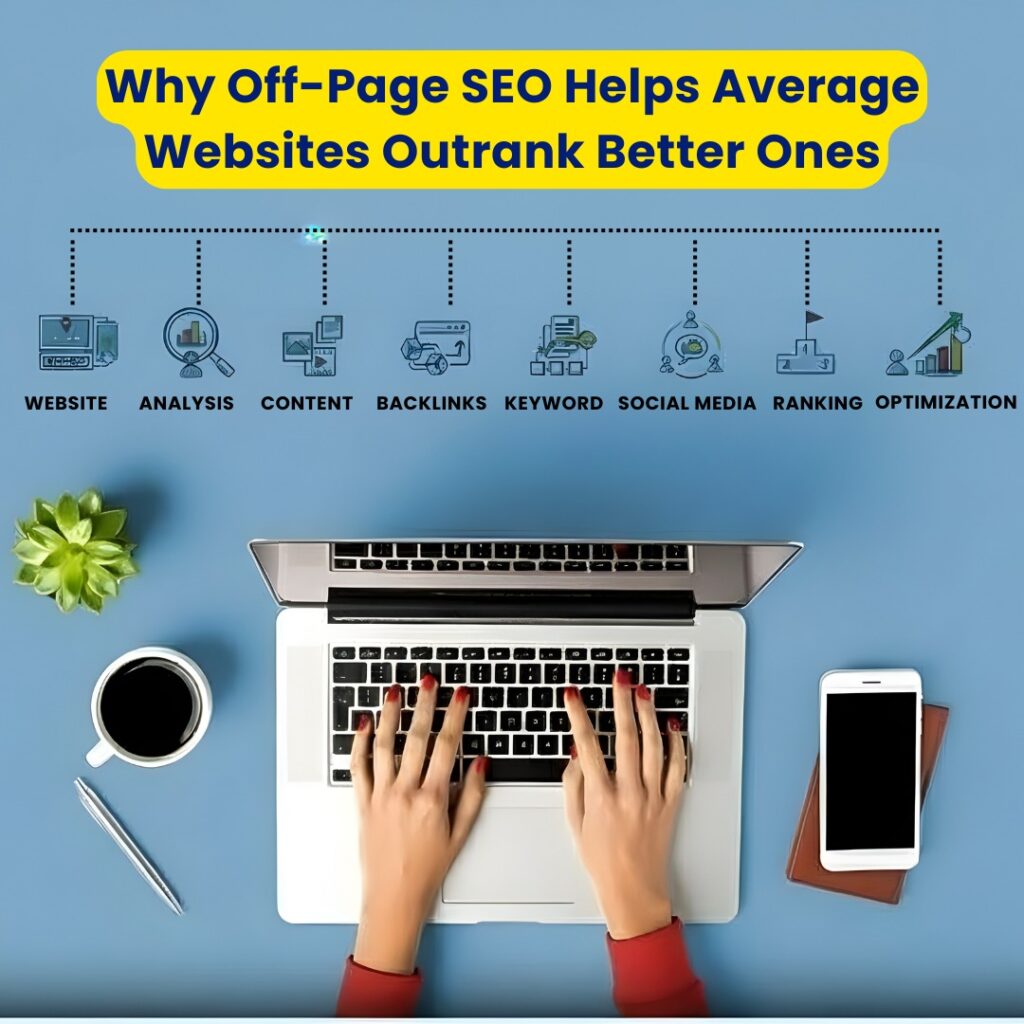
In today’s competitive digital marketing landscape, off-page SEO plays a crucial role in improving a website’s visibility and authority on search engines. Unlike on-page SEO, which focuses on optimizing elements within your website, off-page SEO involves activities performed outside your website to enhance its credibility, trust, and relevance. These activities include link building, social media engagement, guest blogging, forum posting, and brand mentions. A strong off-page SEO strategy helps search engines recognize your website as trustworthy, leading to higher rankings, increased traffic, and long-term online success.
What Is Off-Page SEO?
Off-page SEO refers to all external efforts made to improve a website’s position on search engine results pages (SERPs). The primary goal of off-page SEO is to build authority and trust through high-quality backlinks, social signals, influencer outreach, brand mentions, and content promotion. These signals help search engines evaluate how valuable and reliable your website is compared to competitors.
Key Components of Off-Page SEO
1. Link Building
Link building is the foundation of off-page SEO. It involves acquiring backlinks from other reputable websites. Backlinks act as votes of confidence, indicating to search engines that your content is valuable. High-quality backlinks from authoritative sites carry more weight and positively impact rankings, while low-quality or spammy links can harm SEO.
2. Social Media Engagement
Although social media signals are not direct ranking factors, they play an important role in driving traffic and increasing brand visibility. Likes, shares, comments, and engagement on platforms like Facebook, Instagram, LinkedIn, and Twitter help your content reach a wider audience and improve the chances of earning backlinks.
3. Influencer Marketing
Influencer marketing helps expand your brand’s reach by leveraging trusted voices in your industry. Influencers can promote your content to their audience, resulting in increased exposure, backlinks, and credibility. Influencer endorsements also act as social proof, helping build trust among potential customers.
4. Brand Mentions
Brand mentions, even without direct backlinks, contribute positively to off-page SEO. Search engines recognize unlinked brand mentions as signals of authority and relevance. Consistent brand mentions across trusted platforms strengthen your online reputation.
5. Guest Blogging
Guest blogging on reputable websites within your niche is an effective way to earn quality backlinks and reach a new audience. It helps establish your expertise, improves brand credibility, and drives targeted traffic to your website.
6. Forum Posting
Participating in industry-related forums and online communities allows you to share knowledge and answer user queries. By providing valuable insights, you can build authority, generate referral traffic, and attract potential customers organically.
7. Content Marketing
High-quality, shareable content is essential for off-page SEO success. Blog posts, infographics, videos, and guides that provide value encourage users to share and link back to your content, strengthening your off-page SEO efforts.
Why Is Off-Page SEO Important?
Off-page SEO is essential for building trust, authority, and visibility in search engines. Let’s explore its key benefits:
Improves Search Engine Rankings
Search engines use backlinks and brand signals to evaluate a website’s credibility. High-quality backlinks and positive brand mentions indicate trustworthiness, helping improve rankings on SERPs.
Increases Domain Authority
Domain Authority (DA) reflects a website’s overall strength. Off-page SEO activities such as link building and brand mentions directly contribute to increasing DA, improving your chances of ranking for competitive keywords.
Drives Organic Traffic
Backlinks, social media referrals, and influencer promotions bring targeted organic traffic to your website. Increased traffic creates more opportunities for leads, conversions, and sales.
Enhances Online Reputation
A strong off-page SEO profile builds your brand’s credibility and positions your business as an industry authority. Positive mentions and quality backlinks help establish trust with users and search engines alike.
Boosts Brand Awareness
Off-page SEO strategies increase your brand’s visibility across multiple platforms. Greater exposure leads to higher recognition, improved trust, and stronger customer engagement.
Benefits of Off-Page SEO
Higher search engine rankings
Increased website traffic
Better brand exposure and recognition
Improved domain authority
Long-term and sustainable SEO results
A well-executed off-page SEO strategy delivers lasting benefits, even during search engine algorithm updates.
Conclusion
Off-page SEO is a vital part of any successful SEO strategy. By focusing on quality link building, social media engagement, influencer collaborations, guest blogging, and content promotion, businesses can improve search rankings, drive organic traffic, and strengthen their online reputation. Although off-page SEO requires consistent effort, its long-term benefits make it a valuable investment for sustainable digital growth.
By implementing the right off-page SEO strategies, you can position your website as an authority, attract more visitors, and achieve your business goals effectively.