Google vs. Facebook Marketing: Which Should You Use?
In the rapidly evolving digital landscape, the two titans of PPC advertising are undoubtedly Google Ads and Facebook Ads. For any business striving to scale, these platforms are not just tools—they are essential growth engines. At Swinteck, we frequently see businesses wrestling with the same question: Where should we focus our time and budget to get the best ROI?
While both platforms share similarities, understanding their core distinctions is critical to crafting a strategy that actually converts. Choosing between them isn’t about which one is “better” globally; it’s about which one aligns with your specific business goals, audience behavior, and growth stage.
What Are Google Ads?
Formerly known as Google AdWords, Google Ads is a powerhouse pay-per-click (PPC) platform. It allows businesses to place ads directly on the Google Search Engine Results Page (SERP) and across the extensive Google Search Partner network.
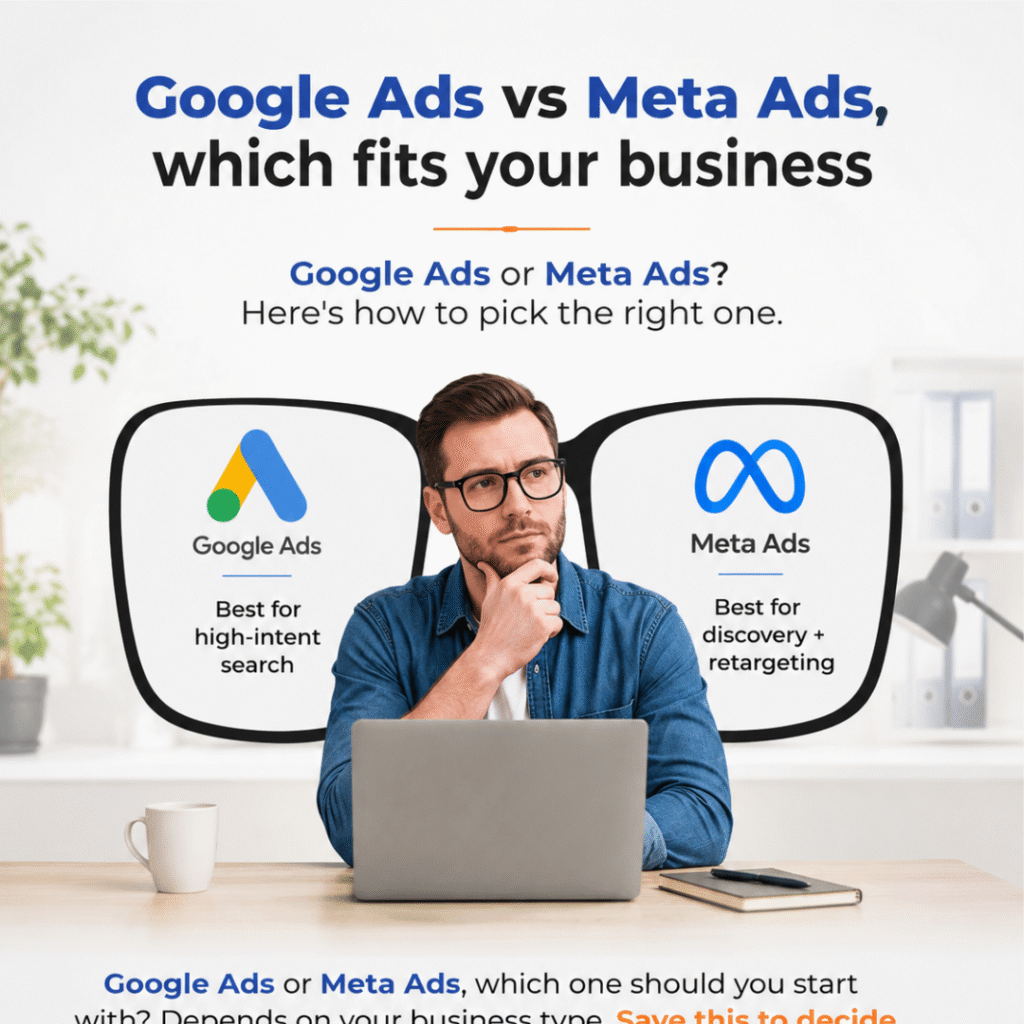
The secret sauce of Google Ads is **intent**. Your ads appear when users are actively searching for solutions—using specific keywords related to the products or services your company provides. You aren’t interrupting the user; you are appearing exactly when they are looking for help.
What Are Facebook Ads?
Facebook Ads is a robust, highly targeted advertising ecosystem within the Meta network, spanning Facebook, Instagram, Messenger, and the Audience Network.
Unlike search-based advertising, Facebook Ads are **interest-based**. They allow you to put your brand in front of users based on their demographics, behaviors, and interests, regardless of what they are searching for at that moment. With versatile formats like video, carousels, and single images, Facebook Ads excel at capturing attention and nurturing prospects through the discovery phase.
Key Differences: Google Ads vs. Facebook Ads
1. Audience Size vs. Context
Both platforms offer massive reach, but the context of that reach is different. Google handles billions of searches daily, making it the destination for information-seeking behavior. Facebook reaches billions of active users during their leisure time, making it the premier destination for brand discovery and social interaction. Don’t base your decision solely on the numbers; ask: *Is my product something people search for, or is it something they discover?
2. Purchaser Intent
Google Ads historically dominates in high-intent conversion. If a user’s air conditioner breaks, they go to Google and search for “HVAC repair near me.” That user is ready to hire someone immediately.
Facebook Ads, by contrast, are often less effective at capturing that specific “immediate need” intent. However, they are unmatched at building brand affinity over time. A user might not click your HVAC ad on Facebook today, but if they see your brand consistently, you’ll be top-of-mind when they eventually *do* need you.
3. Targeting Capabilities
While both platforms allow for basic demographic targeting (age, gender, location), Facebook provides unparalleled depth. By leveraging Meta’s vast data on user behavior and interests, you can create hyper-specific custom audiences that Google’s search-based model cannot replicate.
Google vs. Facebook: When to Apply Each
The right strategy often involves a blend of both, but here is how to prioritize:
When to Use Google Ads
Use Google Ads when you want to capture **demand**. It is the ideal channel for:
* Businesses with high-intent service offerings.
* Companies where customers are actively searching for specific solutions.
* Driving high-quality leads that are ready to convert.
When to Use Facebook Ads
Use Facebook Ads when you want to build **awareness and interest**. It is the ideal channel for:
* Building brand visibility from scratch.
* Targeting specific demographics that fit your ideal customer profile.
* Driving traffic to top-of-funnel content to nurture prospects.
Unlock Your Growth with Swinteck
Navigating the complexities of Google and Facebook Ads requires more than just a budget—it requires a data-driven strategy. At “Swinteck” We specialize in helping businesses in the Mohali region and beyond maximize their digital presence.
Our team doesn’t just run campaigns; we conduct deep-dive audits of your business needs to ensure every rupee spent is optimized for growth. Whether you need the high-intent lead generation of Google or the engagement-driven power of Facebook, Swinteck is here to build the roadmap for your success.
**Ready to scale? Let’s talk about your advertising strategy today.**
FAQ’s
Q1. Which advertising platform offers a higher ROI for small businesses in Mohali: Google Ads or Facebook Ads?
Answer: The higher ROI depends heavily on your business model:
- Google Ads delivers immediate, high-ROI conversions for high-intent services (e.g., HVAC repair, emergency services, legal assistance, local B2B services) where customers actively search for immediate solutions.
- Facebook Ads offers a superior ROI for visual, consumer-driven, or brand-building businesses (e.g., e-commerce, fashion, restaurants, real estate) where visual media creates demand.
Q2. How do Google Ads and Facebook Ads differ in terms of targeting and user intent?
Answer:
- Google Ads targets User Intent: Ads trigger when users type specific keywords into Google, meaning the user is actively seeking a product or solution right now.
- Facebook Ads targets User Demographics and Interests: Ads appear in newsfeeds based on user profile data, behaviors, and specific interests, introducing products to users who may not be actively searching for them yet.
Q3. Can a business run Google Ads and Facebook Ads together for better results?
Answer: Yes, running an integrated multi-channel strategy yields the highest conversion rates. A common, effective strategy is using Facebook Ads to build brand awareness and capture top-of-funnel engagement, and then using Google Search Ads or Google Remarketing to convert users when they actively search for your service online.
Q4. What is the average cost comparison between Google Ads and Facebook Ads?
Answer: Generally, Facebook Ads have a lower Cost-Per-Click (CPC) and lower Cost-Per-Mille (CPM), making them more cost-effective for reaching wide audiences and driving traffic. Google Ads typically have a higher CPC, but they yield higher conversion rates because the user already possesses purchasing intent.
Q5. How can Swinteck help optimize my PPC advertising strategy in Mohali?
Answer: Swinteck provides specialized PPC and digital marketing services in Mohali, Punjab. We analyze your target market, perform keyword research, setup conversion tracking, and manage ad spend across Google Ads and Meta platforms to maximize lead generation, ROI, and local brand presence.